

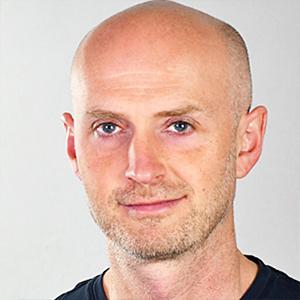
Andreas Hermann
Dr. Hermann wrote his PhD thesis in stem cell biology on “In vitro neurogenesis of adult neural stem cells from bone marrow and brain” and his MD thesis in neurology about “Reduced LRRK2 neurons in striatum of Parkinson’s patients question a retrograde disease mechanism?“. During his postdoc with Alexander Storch at the Technische Universität Dresden and the Center for Regenerative Therapies Dresden his initial studies were on characterization of different adult neural stem cell types from murine and human brain and human bone marrow. Special impetus was put on the regenerative capacity of the adult midbrain. The second part of his postdoc dealt with programming and re-programming of somatic cells to subtype specific neurons and disease modelling of neurodegenerative diseases. During his training he had research stays at the Molecular Biology Laboratories of Prof. Kwang-Soo Kim, McLean Hospital, Harvard Medical School, Boston, MA, USA and at the North-Eastern Federal University (NEFU), Scientific Research Institute of Health, Yakutsk, Republik Yakutien, Russia. He was heading the Division for Neurodegenerative Diseases of the Dept. of Neurology and was deputy director of the Center for Healthy Ageing at the Technische Universität Dresden, Germany, and clinical coordinator of the German Center for Neurodegenerative Diseases (DZNE) side Dresden. Since 2019 he is W3-Schilling Professor for Translational Neurodegeneration at the Rostock University Medical Center and heading the prospective clinical registry of ALS patients within the DZNE.
The main focus of the working group is the bidirectional translation between basic science and clinical patient work, including human patient-derived iPSC cultures, drug development, biomarker development (wet markers, MRI markers, PET markers and behavioral endophenotypes); characterization of prodromal states of neurodegeneration and clinical correlation of spreading of disease pathology including non-motor symptoms in neurodegenerative diseases. Future direction will more and more involve work on healthy and diseased aging including modes and mechanisms of disease conversions from prodromal stages or interventions to avoid secondary aging. To achieve these goals, our group uses the entire spectrum of clinical research from fundamental to patient-oriented research. We combine long standing traditions of neuroscientific research at the Rostock University Medical Center by working on neurodegenerative diseases with up-to-date human stem cell-based cell systems. This mainly includes the use of patient-specific models and the development of individualized therapeutical strategies for neurodegenerative diseases in a bidirectional clinical translation approach.
Most important recent papers of the group:
Naumann M, Pal A, Goswami A, Lojewski X, Japtok J, Vehlow A, Naujock M, Günther R, Jin M, Stanslowski N, Reinhardt P, Sterneckert J, Frickenhaus M, Pan-Montojo F, Storkebaum E, Poser I, Freischmidt A, Weishaupt JH, Holzmann K, Troost D, Ludolph AC, Boeckers TM, Liebau S, Petri S, Cordes N, Hyman A, Wegner F, Grill S, Weis J, Storch A, Hermann A. Impaired DNA damage response signaling by FUS-NLS mutations leads to neurodegeneration and aggregation formation. Nature Communucations (2018), 9:335. DOI: 10.1038/s41467-017-02299-1
Chatterjee M, Özdemir S, Fritz C, Möbius W, Kleineidam L, Mandelkow E, Biernat J, Doğdu C, Peters O, Cosma NC, Wang X, Schneider LS, Priller J, Spruth E, Kühn AA, Krause P, Klockgether T, Vogt IR, Kimmich O, Spottke A, Hoffmann DC, Fliessbach K, Miklitz C, McCormick C, Weydt P, Falkenburger B, Brandt M, Guenther R, Dinter E, Wiltfang J, Hansen N, Bähr M, Zerr I, Flöel A, Nestor PJ, Düzel E, Glanz W, Incesoy E, Bürger K, Janowitz D, Perneczky R, Rauchmann BS, Hopfner F, Wagemann O, Levin J, Teipel S, Kilimann I, Goerss D, Prudlo J, Gasser T, Brockmann K, Mengel D, Zimmermann M, Synofzik M, Wilke C, Selma-González J, Turon-Sans J, Santos-Santos MA, Alcolea D, Rubio-Guerra S, Fortea J, Carbayo Á, Lleó A, Rojas-García R, Illán-Gala I, Wagner M, Frommann I, Roeske S, Bertram L, Heneka MT, Brosseron F, Ramirez A, Schmid M, Beschorner R, Halle A, Herms J, Neumann M, Barthélemy NR, Bateman RJ, Rizzu P, Heutink P, Dols-Icardo O, Höglinger G, Hermann A, Schneider A. Plasma extracellular vesicle tau and TDP-43 as diagnostic biomarkers in FTD and ALS. Nat Med. 2024 Jun;30(6):1771-1783. doi: 10.1038/s41591-024-02937-4.
Pal A, Grossmann D, Glaß H, Zimyanin V, Günther R, Catinozzi M, Boeckers TM, Sterneckert J, Storkebaum E, Petri S, Wegner F, Grill SW, Pan-Montojo F, Hermann A. Glycolic acid and D-lactate-putative products of DJ-1-restore neurodegeneration in FUS - and SOD1-ALS. Life Sci Alliance. 2024 May 17;7(8):e202302535. doi: 10.26508/lsa.202302535
Grossmann D, Malburg N, Glaß H, Weeren V, Sondermann V, Pfeiffer JF, Petters J, Lukas J, Seibler P, Klein C, Grünewald A, Hermann A. Mitochondria-Endoplasmic Reticulum Contact Sites Dynamics and Calcium Homeostasis Are Differentially Disrupted in PINK1-PD or PRKN-PD Neurons. Mov Disord. 2023 Oct;38(10):1822-1836. doi: 10.1002/mds.29525.
Szewczyk B, Günther R, Japtok J, Frech MJ, Naumann M, Lee HO, Hermann A. FUS ALS neurons activate major stress pathways and reduce translation as an early protective mechanism against neurodegeneration. Cell Rep. 2023 Jan 24;42(2):112025. doi: 10.1016/j.celrep.2023.112025.